
Zine makers create cultures of acceptance, pride, and subjectivity, one self-published page at a time.
story and photographs by Kimi Eisele
Take a sheet of paper and fold it in half lengthwise. Then fold it widthwise, once, twice. Open it to find eight mini “pages.” With scissors, cut partway down the central crease, then fold again and gently push together. Voila! A handmade mini-magazine, or zine, ready for your most soulful or silly expressions.
If that was confusing, you can watch someone make a zine here on You Tube, or learn from an actual person—sometimes called a “zinester”—who makes, sells, and trade zines.
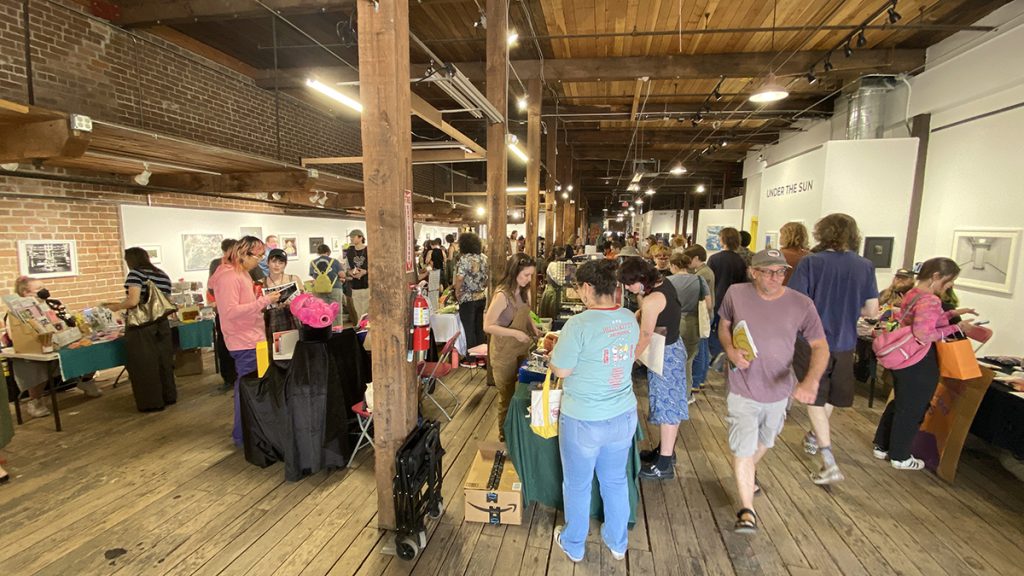
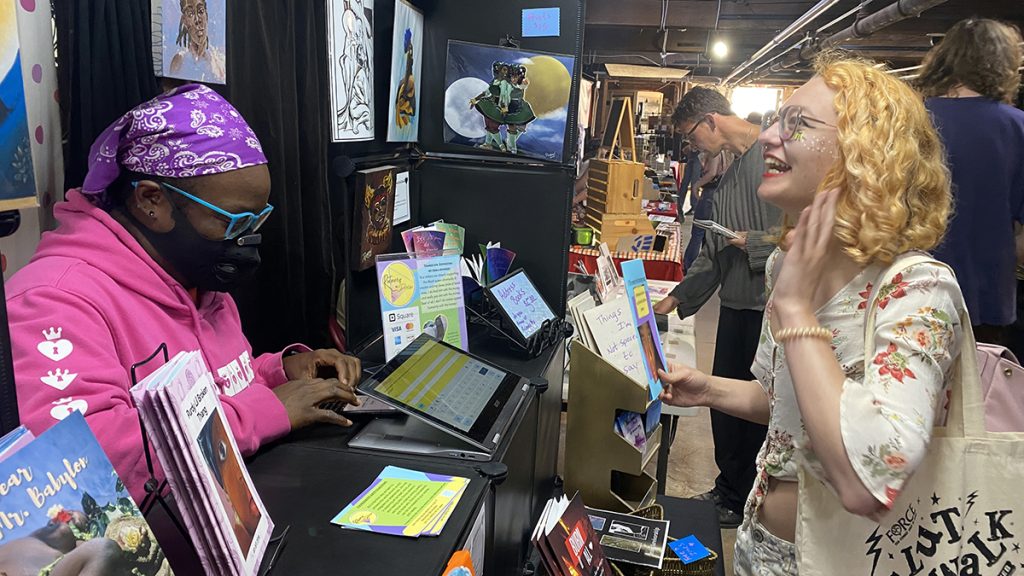
Over a hundred of such people gathered at the Tucson Zine Fest, held at the Steinfeld Warehouse, 101 W 6th St, in late March. Since 2019, the festival has showcased zine makers and their work, creating a day-long collective archive of belonging, pride, and acceptance.
A zine is a self-published, independently produced, small-circulation booklet that anyone can make about any topic.
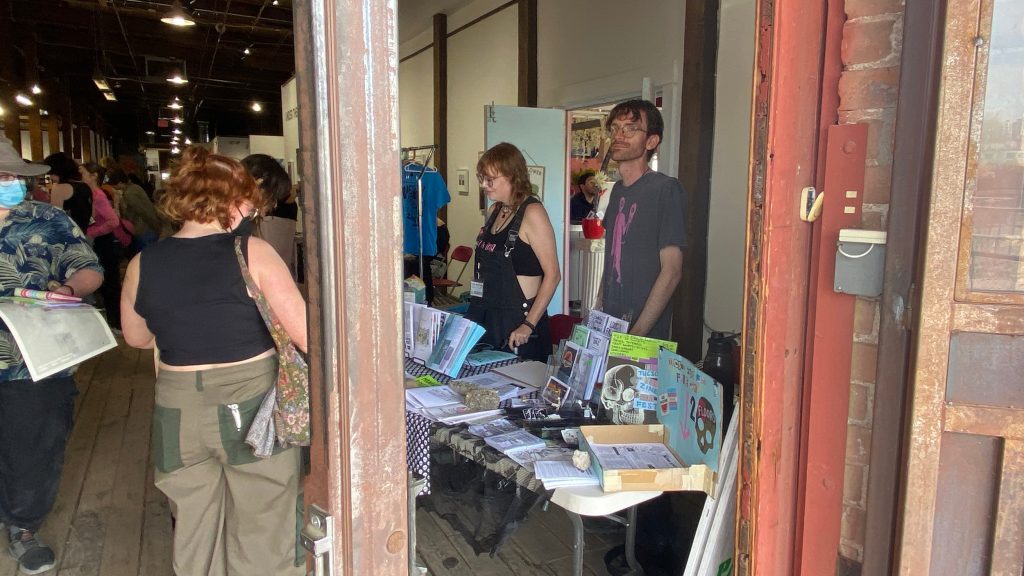
“There are no hard and fast rules for zine making,” says Zac Finger, who makes zines mostly about science fiction and satire. “People always ask me, ‘Is it okay if I make a zine about this? Is it okay if I make a zine about this?’ And I’m like, yeah, it’s a hundred percent okay. In fact, that’s the whole point.”
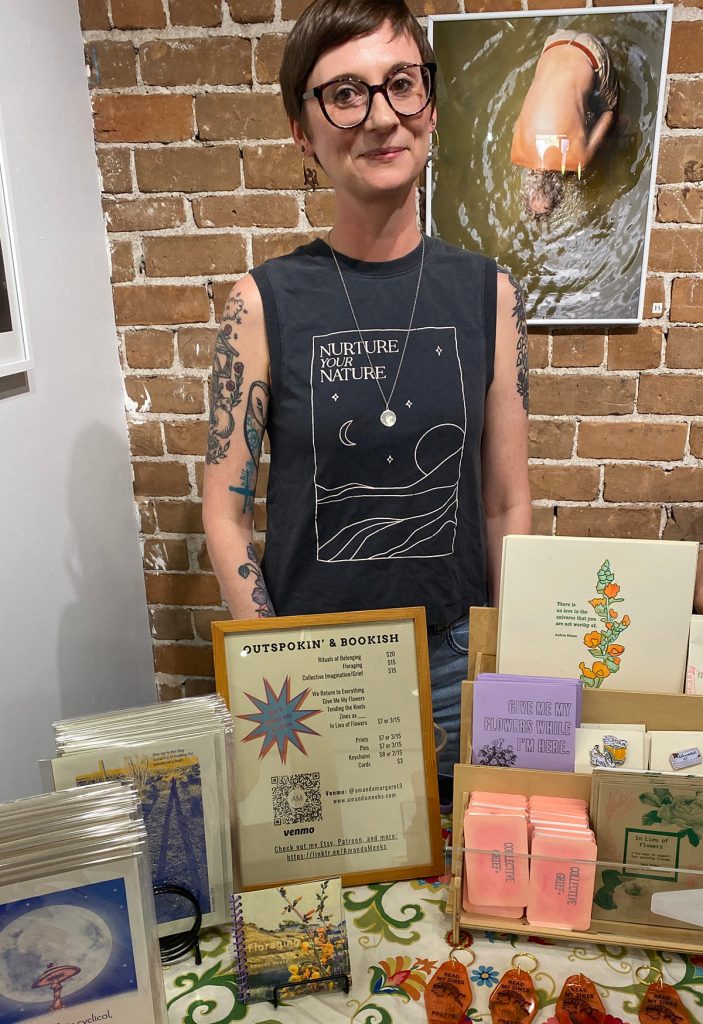
Zines are “a low barrier art medium,” says Ames Meeks, who’s been printing and sharing zines for several decades. “You don’t have to have any special skills to make a zine. You can literally put it together with a pen and piece of paper. Kids can make zines. Older adults can make zines. Our elders have made zines.”
An inherently democratic form, zines celebrate subjectivity. “Zines have a long history of kind of capturing marginalized voices and promoting ideas and histories, stories, and sharing information,” Meeks says. “They are often political and often touch on topics like identity, oppression, and other social issues.”
The first zine Meeks made was called The Dos and Don’t of Feminist Flirting, which included “stories of flirting gone wrong and right” as well as advice like “listen to show genuine interest in someone,” she says. Meeks’s most recent zines are similarly informative but focus mostly on grieving and death care (she is also a death doula). She also makes “perzines,” short for personal zines.
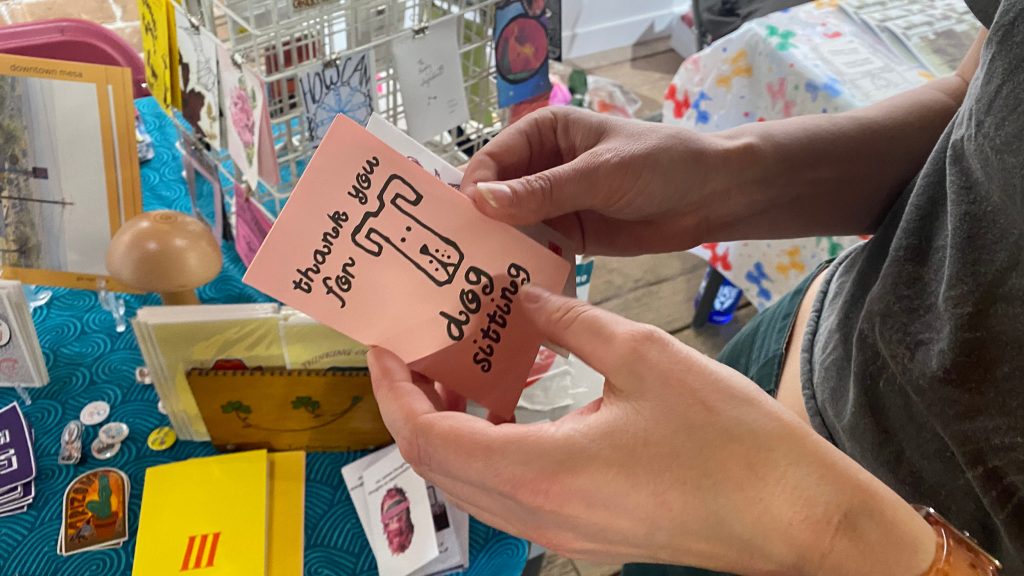
Among the zine titles on display at this year’s Tucson Zine Fest were How to Host a Book Club, Echo Chamber Music, Purdy Lil Broken Thang, front cover (a zine about how to make zines), and thank you for dog sitting.
For Elisa Masks, who co-organizes Zine Fest with Finger and makes zines with titles like Technophilia and Just Girly Demon Things, zine making is about independent agency. “I’ve been told before it’s very unusual for a girl to write about horror or sci-fi, but that’s why I turned to zines is because no one else would publish those things for me. So, I just did it myself,” she says.
Doing it yourself is a defining characteristic of zine culture.
“There’s not someone watching over you trying to make sure that it’s going to be marketable or that your ideas aren’t going be politically acceptable,” Finger says. “There’s no editor.”
Nor are there institutional or corporate publishers. While zine makers can pay local printers to print their work, they can also “just use a photocopier in their house or wherever they work and secretly photocopy it,” Mask says.
Dviation, a multimedia artist, made his first zine on a copy machine in 1992 after being inspired by his family’s Jet Magazine subscription. After assembling pictures of flowers and insects he’d cut out of National Geographic and Zoo Books magazines, he went to the library where a librarian showed him how to photocopy his materials.
“They were brand new Xerox machines, and you just lay them on the scanner bed. She told me how to put the button so that it printed the front and the back, and I just thought I was the coolest person on earth,” he says.
Fanzines, Riot Grrrls, and returning to analog
Common zine culture traces its origins to a 1930s zine called The Comet published by Science Correspondence Club to share scientific knowledge and invention. The zine eventually incorporated science fiction as well, which perhaps inspired later “fanzines” in the 1940s created by fans of particular cultural phenomenon (often science fiction), who then gifted them free or traded them.
The first known queer zine, Vice Versa, was also printed in the 1940s by an artist named Edythe Eyde who published in Los Angeles under the pen name Lisa Ben (an anagram of lesbian). Several decades later, during 1970s punk music scene, fans made zines to celebrate their favorite bands and share punk philosophies. Later, a feminist response to sexism and patriarchy in the punk music scene birthed the riot grrrl movement, with all-female bands, manifestos, zines, and the riot grrrl press, which helped distribute zines.
The Internet changed the way people shared personal information, Meeks says, as many creative people joined MySpace and later, Facebook and Instagram to share personal stories and ideas. “Zines never fully went away, but they definitely became a little less common,” she says.
But today’s zine makers believe there’s a zine resurgence happening partly in response to the Internet.
Tactile and handmade, zines are attractive to people wanting more face-to-face analog experiences.
“They’re meant to be accessible and it’s about connecting,” says Cenorina Ramirez, creator of Mi Casita Press. “When you go to a zine fest, you’ll have people that are trading, so it’s not about the profit.”
Zines offer their makers a lot of protection and agency, particularly as social media companies can now take ownership over or delete individual content, from artwork to words to images.
“That’s not anything you have to worry about with zine making,” Finger says.
Zines also offer a way for people to share information safely.
“A lot of zines are about the community and how we can help people in the community but still keep that information underground because if you put things online these days, it can kind of be dangerous in a sense,” Mask says.
Zines also offer clear counterpoint to AI-created content. “I’m seeing even more people want to make zines in response to AI slop,” Meeks says. “You you can’t really have AI magazine and call it a zine. It’s very human.”
Tangible artifacts and archives
Chet Lawton, an avid journaler and sketchbook artist, has been making zines since 2012. Zines allow him to share his work with others, preserve memories, and “document the physicality of places that might be fleeting,” he says.
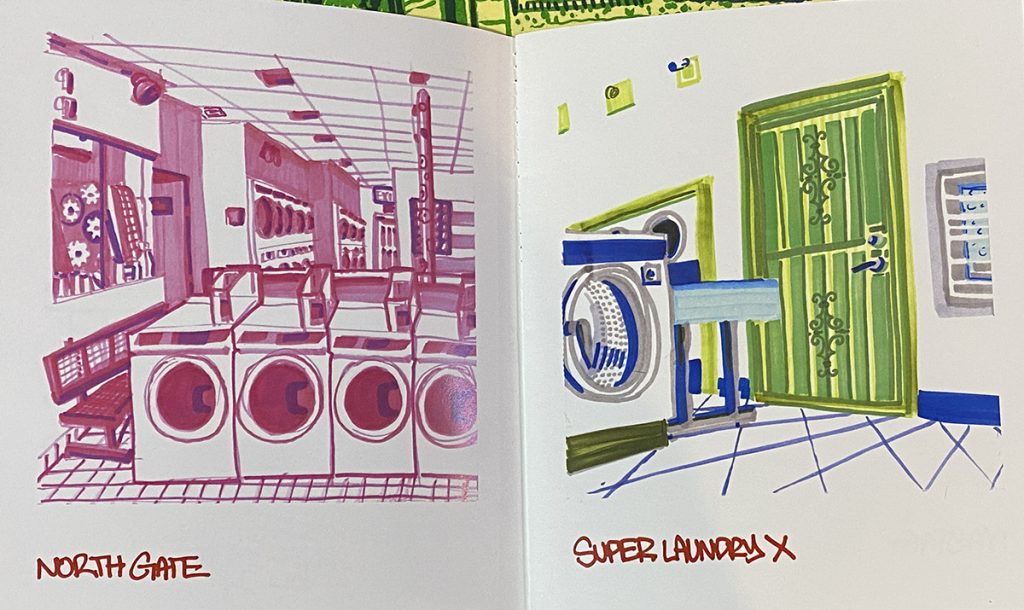
Scenes from the Laundromat, for instance, is a living archive of Tucson laundromats. Made with colored markers, the drawings are precise and lively. “Laundromats are not designed to be very pretty. They’re very utilitarian, but I like finding the beauty in spaces that maybe aren’t intentionally beautiful.”
Lawton says part of his goal is document a particular laundromat experience before it’s gone. “Laundromats are changing in their own way. Most are going away from the coin specifically–they all have apps now. I’m always looking for the ones that are coin oriented, because it’s just a ritual for me that I enjoy.”
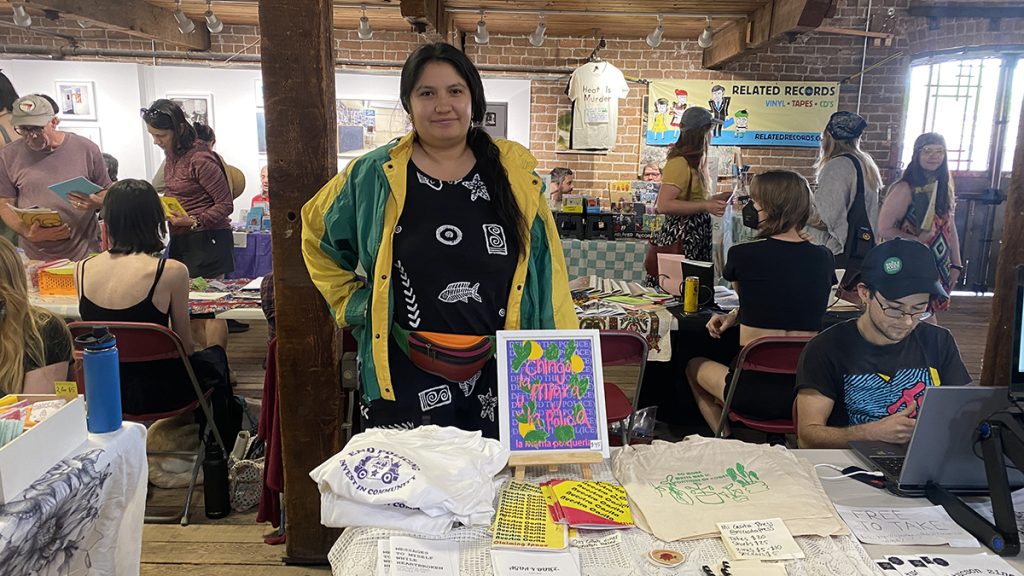
Ramirez, who’s been making prints and zines for seven years, also considers zines artifacts. Her zine September 5 documents the day in 2017 the Trump administration announced the recission of the Deferred Action for Childhood Arrivals (DACA) program, offering temporary protection from deportation to immigrant youth who came to the US as minors.
On a single page, she illustrated her thoughts about that day and talked with her sister and others, then folded it into a zine “A zine is about using your resources, right?” she says. “It’s very personal.”
Ramirez also prints zines with and for others. She printed Agua y Dulce for a friend who shares a family narrative about food insecurity during the Nicaragua civil war. Another, Nuestra Casita, is a collection of art made by her friends during gatherings she held in her living room.
Her zines mainly focus on “QT-BIPOC” stories (stories by and about queer, trans, Black, Indigenous, and people of color) and aim to “share solidarity and educate,” she says. “It’s archiving this one moment. You share it with people and then you have this physical, tangible thing that can last,” Ramirez says.
As artifacts, zines can speak to the collective experiences of those who make them. They can also mark the subjects of interest for both zine makers and zine collectors. “I think a zine is like a time capsule, capturing the political mood of the time,” Mask says.
Zines themselves are also a type of ephemera that can be archived. Multnomah County Library in Portland, Oregon, for example has an extensive zine library, Meeks says. “They also end up in community centers, community archives,” she says.
Some of the zines featured at Tucson Zine Fest will end up at the zine library at Groundworks, 2919 E Grant Rd, a youth-drive music and arts community center. “That’s a great place for people to check out if they want to see independently published material,” says Finger, who co-teaches a zine workshop there every month.
DIY but not all alone
While zines celebrate individual ideas, they are also rooted in celebrating communal experiences, offering mutual support, and finding connection.
Emiland Kray, an artist who has struggled with depressive and manic episodes, says his zines are often about reminding himself and others of their worth. I belong here, for example, “is a book and a reminder that you belong in the spaces that you inhabit—your body, your community, the world at large.” He made the book to support himself and also “to help extend that positive feeling to others.”
Kray made I am not a waste, a companion booklet, after a long period of unemployment. “I needed to remind myself again that my value as a person is not determined by the value that I can accrue for others through being, being a worker for them.”
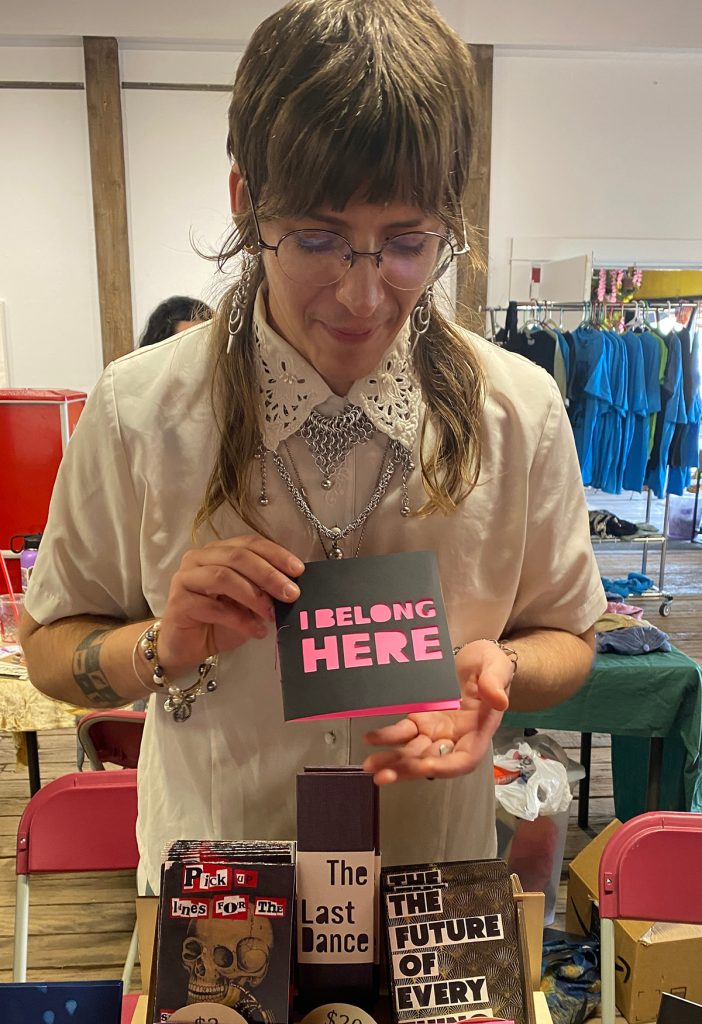
The booklet offers a list of “7 things that make your value unquestionable,” including “the air passing through your lips” and “your magnificent voice.”
Dviation, whose made his first zine as a kid at the library Xerox machine, now makes zines that combine prose, poetry, and information about mental health and self-esteem issues. How to Survive When You’re Not Supposed to, for example, offers support for how to face current sociopolitical challenges by looking at how past generations have lived through similar or worse circumstances. “My mom went to segregated schools, not my grandmother. This was not even a whole generation ago, and she made it. So, we can get through this. We just need to connect.”
The zine shares strategies for embracing interdependence and learning to ask for, receive, and offer help to others. “We’re not supposed to be able to do everything ourselves. We’re supposed to have help from neighbors and friends and even people we don’t like.”
Organizers of Zine Fest say giving artists space to trade or sell their work at Zine Fest makes palpable this idea of community support.
“It feels great knowing that we’ve made a space available for all these artists that otherwise maybe wouldn’t have a venue,” Finger says.
Mask says she feels the power of the festival on a personal level. “I feel like everyone at a zine fest totally accepts me for who I am, which is a wonderful feeling that I don’t experience every day in my life,” she says.
For Dviation, participating in zine culture gives him space to be “a whole human,” an invitation he offers to you, me, and everyone else.
“Everybody should make a zine. Pick something you care about. If you can’t draw, cut out pictures. If you can’t write, do it ransom-note style. Just start finding words that mean something to you and put it on a copy machine, on a scanner at the library. It’s like five cents a copy. Make a zine and get it out to people so that they know what you’re about.”
This was a great event! I was lucky enough to be visiting friends in Tucson and we all attended to see many inspiring artists and writers! I make mini-comics and zines myself and it was a joy to see these wonderful creations from the Tucson Zinesters!