
The annual call of the cicadas invites rituals of listening to, and preparing for, desert summer.
by Kimi Eisele
Every year for the past few decades, my friend Janet and I celebrate First Cicada Day. It’s not a fancy celebration. We get in touch and say, simply, “I heard the first cicada today.” No tambourine party or clinking glasses or booming fireworks. Because who needs loud sounds when you have the cicadas’ call?
For Janet, the call means it’s time to get the water ready. “We have one of those big, horse trough stock tanks, and we cool off in it in the summertime,” she says. “So, one of the ways that we celebrate first cicada day is like, ‘Okay, fill up the stock tank. It’s time.’”
Folk rituals help us mark special occasions and celebrate our beliefs and values. We learn rituals not from textbooks or institutions, but by observing and imitating others and by listening. Bell towers announce weddings, funerals, or worship. A happy birthday song indicates another trip around the sun. The squeaking sound of melting ice marks the beginning of spring across northern regions. And in the Sonoran Desert, the cicadas offer a special soundtrack, letting us know the heat has arrived.
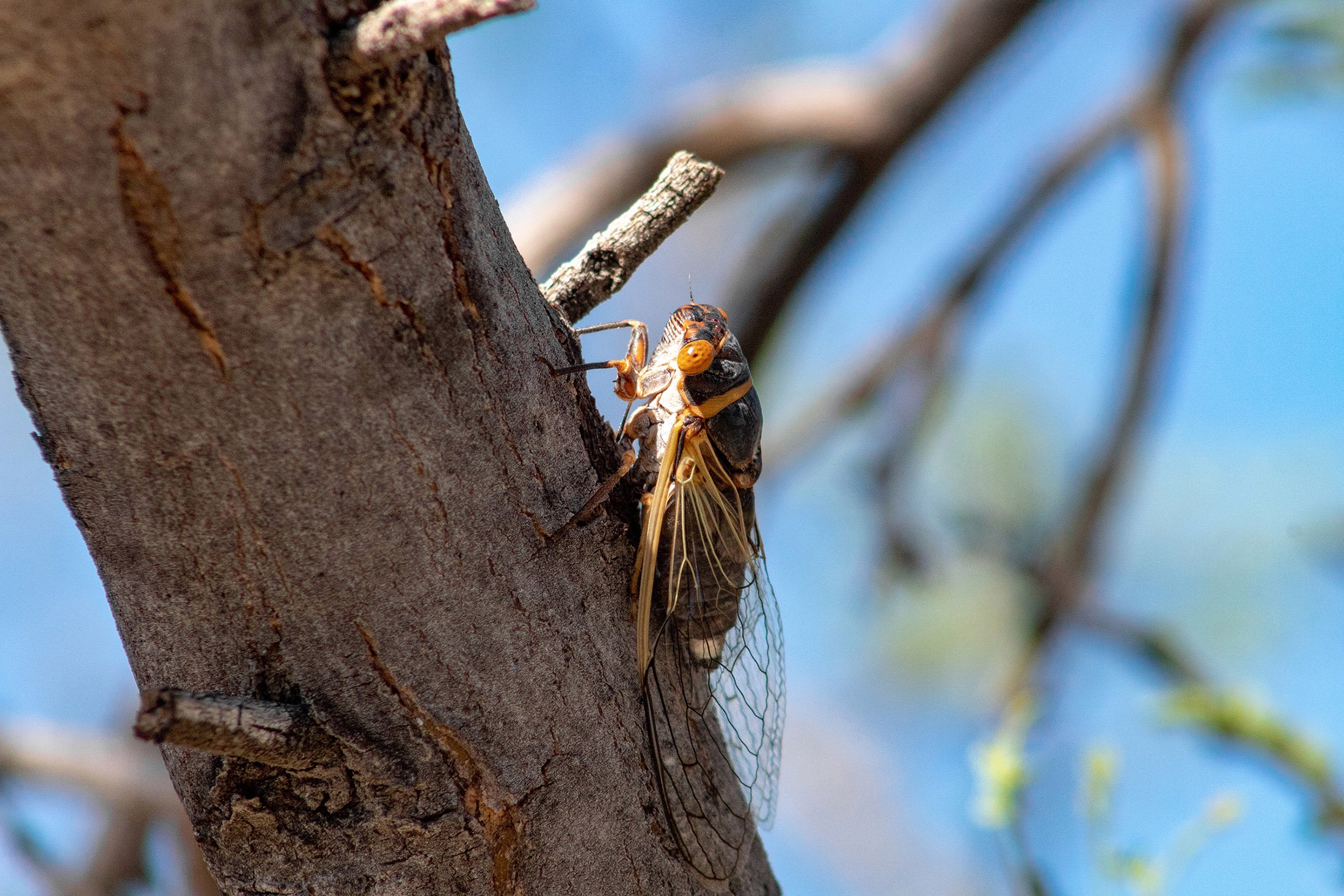
“Usually, cicadas are out at the hottest time of the day because they have a natural evaporative cooling system in their bodies,” says Gene Hall, an entomologist with the University of Arizona Insect Collection.
Not surprisingly, they’re out at that time to attract mates.
“The male is using structures on his body—they’re called tymbals,” Hall says. These vibrate that at a high rate of speed and that’s what creates the sound.”
The heat also serves as protection, Hall says. “Another reason why you hear them at during the daytime when it’s so hot—everything else is hiding, especially a lot of the predators.”
At least four dozen different species of cicadas are found in Arizona, Hall says. They come in all shapes and sizes and make different sounds, from loud shrills to clicking sounds.
Some might find that listening to cicadas in the middle of the summer makes it feel hotter. “But if we didn’t hear cicadas I think there’d be a lot of people that would notice,” Hall says. “So, let’s hope that never happens.”
In recent years, Hall has noticed cicadas seem to be emerging later than usual and sometimes in fewer numbers. For many years, he says, “I could sit here at my desk working or anywhere in town and hear cicadas all the time throughout the day.” But that’s not always the case anymore.
Both summer monsoons and winter rains impact cicada’s food supply and underground gestation periods, which can then influence their development, emergence times, and overall numbers, Hall says.
Different cicadas have different developmental times, Hall says. “Back east, there’s the big 17-year cicada. Out here, our cicada species take a few years underground to develop, and we don’t get the huge numbers like the large outbreaks back East and in the Midwest.”
When the time is right, cicadas emerge from the ground and crawl up trees or sides of buildings, where they wait. This usually happens at night, Hall says.
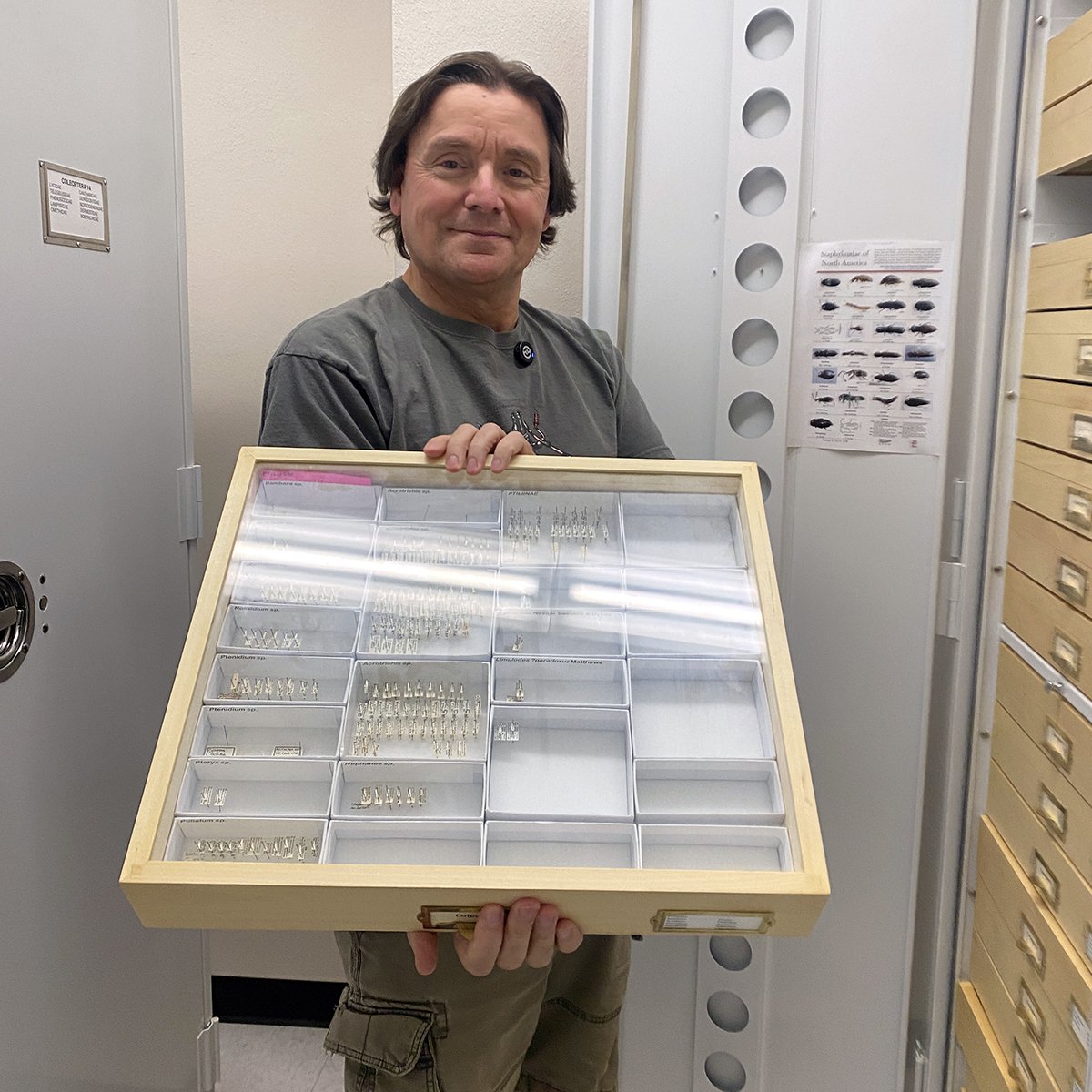
“Most of the predators are asleep or can’t see them. They’re very vulnerable because they’re soft bodied. By the time early morning arrives, their exoskeletons have hardened up and then they fly off,” he says.
Hall says he’s always been tuned into the sounds of insects and other animals. Though he has tinnitus from years past when he worked in records stores and stood too close to the speakers at music concerts, he has sensitive ears. “I can still hear, even with that ringing in my ear, I can still hear like the slightest little sound of like a tree cricket blocks away.”
He studies tiny beetles as a research specialty, he says, and has good vision, which helps him spot them. But his attunement, he says, is also “a part of growing up and trying to be aware of what’s out in nature and out in the wild, in the world, and just listening. You get to hear all the different songs, you know, on the jukebox of nature.”
In the Southwest, that jukebox includes songs from white-winged doves in the spring and spadefoot toads once the rain starts. But in May and June, at the start of the Sonoran Desert’s dry summer, it’s cicadas on repeat.
What do others do to commemorate their arrival? I put out a query on Facebook.
Jessica Moreno wrote: “In the Sonoran Desert, the first cicada buzz marks the start of the coming monsoon rains. My grandmother would mark our calendar by it… rain arrives 6 weeks after the first cicada sings.”
Sarah Cotton wrote: “I enjoy doing a sound meditation outside when they start, letting their drone sound be my focus to help me feel present and connected to the change in season.”
For Hall, commemorating First Cicada Day involves a special annual pilgrimage.
“It’s usually been on this one specific date when I go out to Saguaro National Park. My brother used to work out there and he passed away in 2016. So, I go out there on his birthday, on May 23rd and spend the day there. For the last several years, that’s usually when I hear my first cicadas of the year.”
Hall looks forward to this visit every year. Listening to nature is part living in and tending to a community.
“I think that’s the most important thing people could do is to get outdoors and watch these insects or other animals and listen to them and observe them, because they’re an important part of the fabric of life.”
Kimi Eisele is the managing editor of BorderLore and a folklorist at the Southwest Folklife Alliance.
_

Listen to a short, audio version of this story on How We Belong,
our new mini-program on KXCI Community Radio, FM 91.3 in Tucson.